Standing water, soft spots, and flowing wheel tracks
Water trapped on or beneath a gravel surface can soften the base and encourage rutting. Water running down a driveway can move gravel and cut deeper channels with each storm.
A drainage review considers the slope above the driveway, its surface profile, edges, ditches, crossings, and discharge point. Fresh gravel alone does not correct a low spot that keeps collecting water.
Ditch or swale: what is the difference?
A ditch is a more defined channel beside the access. A swale is a broad, shallow depression that guides surface runoff. Either needs a continuous route to an appropriate outlet.
The right option depends on available space, slope, soil, flow, and maintenance access. A channel that ends at a low spot can simply move the puddle instead of solving the problem.
Connect the surface to the drainage
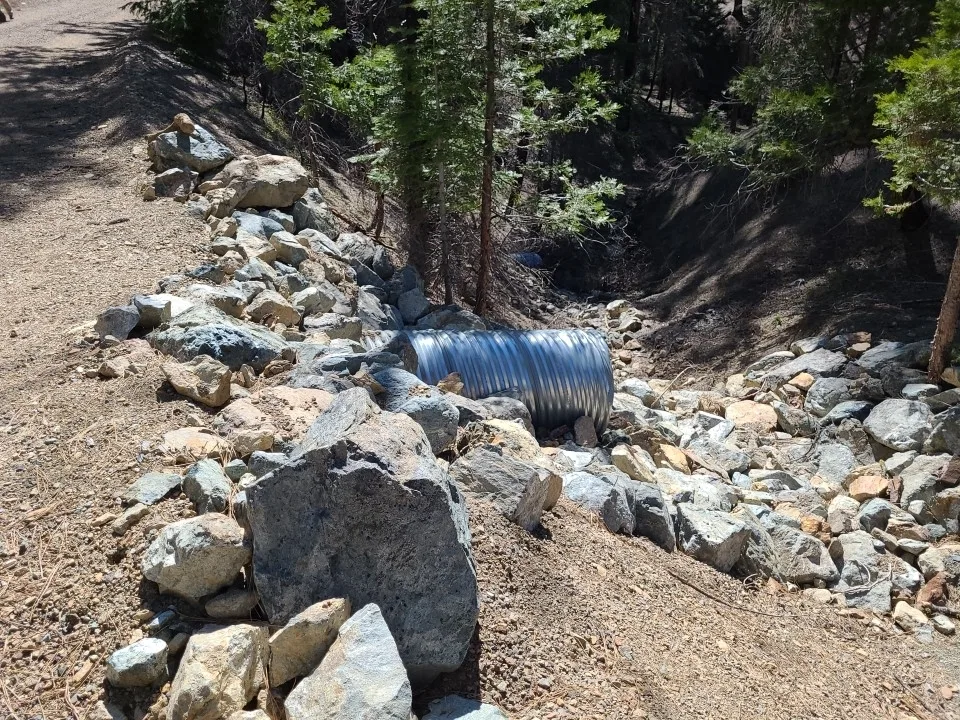
Grading can restore a crown or cross-slope so water leaves the driving surface. Ditch reshaping can remove high spots or buildup that block flow. Where access crosses the drainage path, a culvert may be needed.
Soft sections may also require removal and replacement of weak base material. The quote should distinguish surface reshaping, base repair, material placement, and drainage work so the proposed solution is clear.
Plan the outlet responsibly
Drainage changes should account for neighboring land, existing easements, public roads, and downstream flow. Do not assume runoff can be redirected wherever there is open ground. Confirm permissions and any applicable drainage or floodplain requirements before work begins.