Recurring runoff is more useful than a generic repair label
Describe whether water crosses the driveway, follows the wheel tracks, backs up near an entrance, or leaves gravel at a low edge. Those patterns help distinguish a surface-shaping problem from a ditch, outlet, base, or crossing concern.
Aztec publishes municipal stormwater and drainage information, so work near a city drainage feature should be discussed in that context. The website does not determine whether a private drainage change is allowed or appropriate.
Entrances, curbs, and roadside drainage
A driveway that connects to a city street or state highway can involve more than the gravel inside the property. Before changing a curb cut, drivepad, roadside ditch, or crossing, identify the road authority and ask which current reviews apply.
The City of Aztec publishes road-access standards and permit resources. Requirements depend on the exact location and scope; this site does not promise permit handling or approval.
What to include with an Aztec assessment request
Note the approximate driveway length, whether the route is new or existing, where the damaged area begins, and what happens after rain or snowmelt. Mention narrow gates, parked vehicles, overhead lines, tight turns, and any section that must remain passable.
For a washout or visibly damaged crossing, inspect only from stable ground. Do not drive over an undermined edge or enter moving water to gather details.
Possible work to discuss
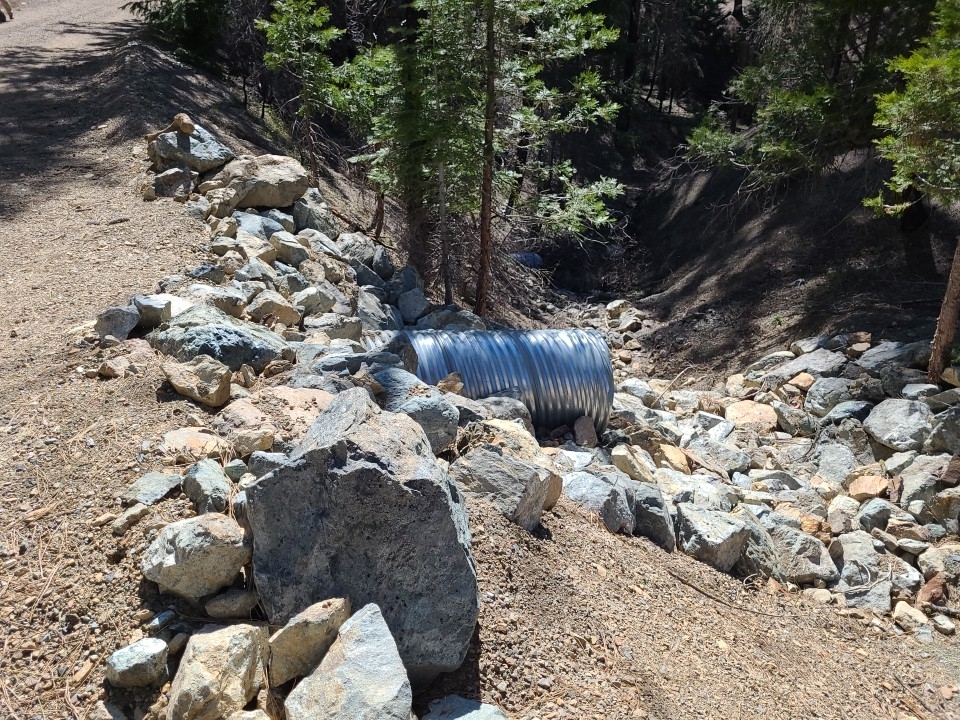
Depending on the site, a provider may discuss regrading, crown restoration, gravel resurfacing, localized base repair, ditch or swale work, erosion repair, or culvert evaluation. Adding gravel alone may not address a repeat water path.
Provider availability and suitability are confirmed after contact. Any construction scope, material, price, schedule, credentials, and approvals come directly from the independent provider.